Your FYP Is Gaslighting You: The Quiet Radicalization Hiding in Plain Sight on TikTok
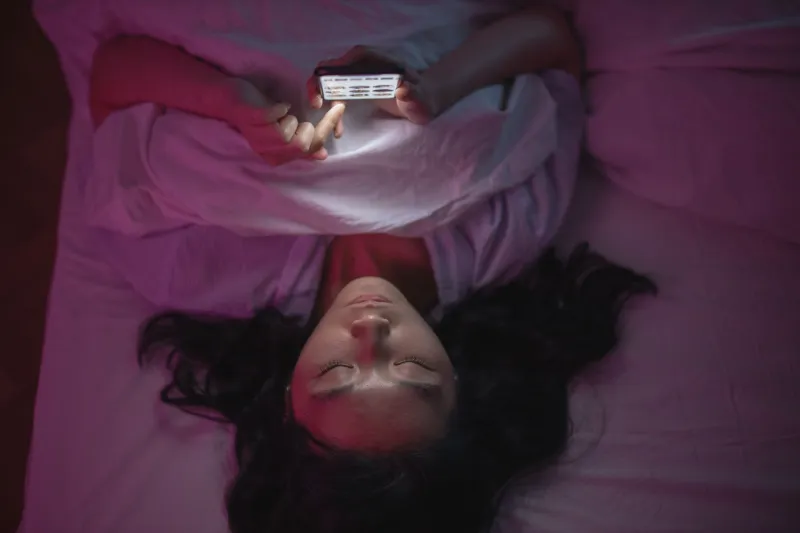
Picture this: You open TikTok on a Tuesday night because you're bored and you've already watched everything on Netflix. You watch a funny video about a dog. Then a cooking hack. Then someone doing an impressive makeup transformation. Thirty minutes pass. You're now watching a video — delivered with the calm, authoritative cadence of a documentary narrator — explaining that a major pharmaceutical company has been suppressing a cure for cancer for fifty years.
You didn't search for it. You didn't follow that account. You didn't ask for any of this.
Your For You Page did.
This is the quiet radicalization problem, and it is one of the most significant and underreported media literacy crises happening in the United States right now. It doesn't look like radicalization — it looks like entertainment. And that's precisely what makes it so effective.
How the Rabbit Hole Actually Works
To understand how mainstream users end up in conspiratorial content, you have to understand what TikTok's algorithm is actually optimizing for. Unlike platforms that primarily rank content based on who you follow, TikTok's recommendation engine is built around behavioral signals: watch time, replays, shares, comments, and crucially — the moment you pause.
The algorithm doesn't care if a video is true. It doesn't care if it's healthy for you to watch. It cares if you watched it all the way through, and whether the emotional response it triggered — outrage, fear, fascination, disbelief — made you stop scrolling long enough to register as engagement.
Here's where the problem compounds: emotionally provocative content almost always outperforms neutral content on these metrics. A video explaining the basic mechanics of how vaccines work will rarely generate the same watch-through rate as a video suggesting that vaccine trials concealed alarming data. The algorithm isn't ideologically motivated. It's engagement-motivated. But the outcome of optimizing purely for engagement, it turns out, is a conveyor belt that reliably surfaces more extreme, more emotionally charged, and more conspiratorial content over time.
Researchers have documented this phenomenon across platforms, but TikTok's particular combination of short-form video, infinite scroll, and an unusually powerful recommendation engine makes it a uniquely efficient delivery mechanism for fringe ideas.
The Frog in the Boiling Water, But Make It Viral
What makes TikTok's version of this problem distinct from, say, YouTube's well-documented rabbit hole effect is the speed and the packaging.
YouTube radicalization tends to happen through longer-form content — hour-long videos that gradually shift the Overton window over weeks and months of viewing. TikTok's version is faster, snappier, and dressed up in the aesthetic language of mainstream entertainment.
Consider how health misinformation spreads on the platform. It rarely arrives labeled as misinformation. It arrives as a chipper creator in good lighting, speaking with the casual authority of someone sharing a "wellness tip." The framing is friendly. The tone is conspiratorial-but-approachable: "They don't want you to know this, but..." The comment section is full of people saying "this makes so much sense" and "why isn't anyone talking about this?"
By the time the content has escalated from "processed food is bad" to "the entire American medical establishment is lying to you about everything," the viewer has been so gradually walked through intermediate steps that the leap doesn't feel like a leap at all.
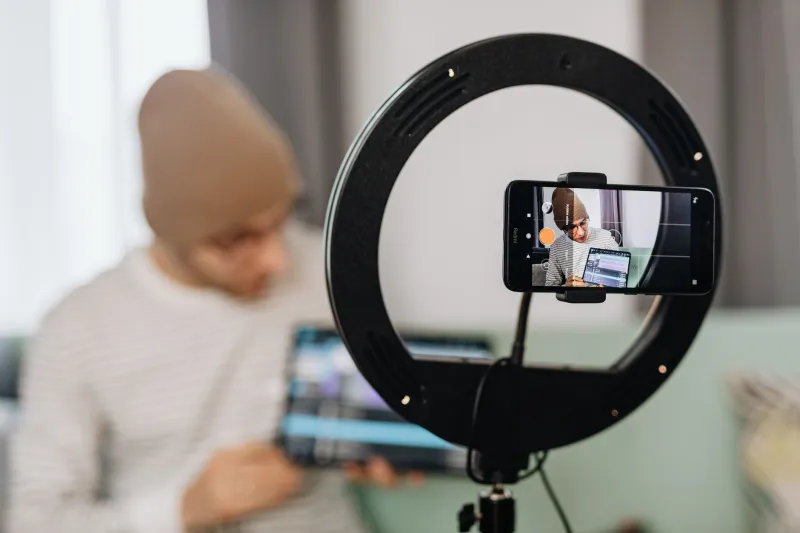
This is sometimes called "context collapse" — the erosion of the frame that would normally help you evaluate whether a claim is credible. On TikTok, a registered nurse, a naturopath with no medical credentials, and a conspiracy theorist with a ring light all look roughly the same. The platform provides almost no visual or structural context that would help a viewer distinguish between them.
Real People, Real Rabbit Holes
This isn't hypothetical. Journalists and researchers who have deliberately tested TikTok's algorithm by creating fresh accounts and engaging with progressively edgier content have consistently found that it takes surprisingly few interactions to shift a feed from mainstream to fringe.
A 2022 investigation by the Center for Countering Digital Hate found that TikTok recommended eating disorder content to new accounts within minutes of those accounts engaging with general fitness videos. Similar patterns have been documented with anti-vaccine content, election denial material, and white nationalist talking points — all surfaced to users who began with comparatively innocuous interests.
The more alarming finding isn't that bad actors are posting bad content. That's always been true of any open platform. The alarming finding is that the algorithm surfaces it, amplifies it, and delivers it to users who never went looking.
The Psychology of "Just Asking Questions"
There's a reason conspiratorial content thrives in short-form video specifically. The format is perfectly suited to a rhetorical technique researchers call "just asking questions" — presenting a series of leading questions or selectively chosen data points without ever making an explicit claim that could be fact-checked.
"Why did the CDC change its guidance three times?" "Doesn't it seem weird that nobody is talking about this?" "I'm not saying anything, I'm just saying..."
This framing is almost impossible to debunk in real time, because it technically makes no falsifiable claim. It plants doubt without asserting anything. And on a platform where the average video is under a minute and there's no space for nuance, the doubt is what sticks — not any subsequent correction.
Cognitive scientists call this the "illusory truth effect": repeated exposure to a claim, even a false one, increases how credible it feels. When TikTok serves you a version of the same conspiratorial narrative eight times in slightly different packaging, your brain starts to file it under "things I've heard a lot" rather than "things I should be skeptical of."
What Media Literacy in 2024 Actually Needs to Look Like
The standard advice — "check your sources," "look for multiple perspectives," "read past the headline" — was designed for a media environment built around text. It maps poorly onto a platform where content is delivered as video, at speed, in a format specifically engineered to bypass deliberate analytical thinking.
Media literacy for the algorithmic era needs to be about understanding systems, not just individual pieces of content. It means asking not just "is this claim true?" but "why is this video in front of me?" and "what does this platform benefit from by showing me this?"
Some educators and researchers are pushing for algorithmic literacy to be incorporated into school curricula — teaching students how recommendation engines work, what engagement optimization means, and why the most emotionally compelling content is not, by definition, the most accurate.
TikTok, for its part, has introduced features like content warnings and links to authoritative sources on certain topics. These are, at best, a Band-Aid on a structural wound.
The Part That Should Actually Scare You
Here is the thing that makes this genuinely terrifying rather than merely concerning: most people who have been nudged toward conspiratorial content by an algorithm don't know it happened. They think they discovered something. They think they found the truth that the mainstream media is hiding.
The algorithm doesn't feel like an algorithm. It feels like intuition. It feels like curiosity leading somewhere interesting. It feels, in the most insidious way possible, like thinking for yourself.
And in a media environment where trust in institutions is already at historic lows, where the phrase "do your own research" has been weaponized into a license to believe anything, and where the most viral content is almost never the most accurate — that feeling is one of the most dangerous things on the internet.
You opened TikTok to watch someone make pasta.
Pay attention to where you end up.