Sorry Not Sorry: The Influencer Apology Video Is Broken and Everyone Knows It
It always starts the same way. The camera is slightly too close. The lighting is aggressively "natural." There's a conspicuous absence of the usual brand deals, sponsored segments, and chirpy intros. And then — the sigh. That long, performative exhale that signals to approximately 4 million subscribers that what follows is serious.
Welcome to the Apology Video Industrial Complex, population: everyone who has ever gone viral for the wrong reasons.
Influencer apology videos have become one of the internet's most reliable forms of unintentional comedy. They're appointment television for chronically online people who enjoy watching someone try — and spectacularly fail — to seem human. But beneath all the cringe is something genuinely fascinating: a case study in how authenticity becomes theater the moment it's performed for an audience.
The Anatomy of a Train Wreck
Let's talk about the formula, because there absolutely is one, and the fact that creators keep using it is both baffling and deeply revealing.
Step one: strip away the production value. No fancy editing, no b-roll, no background music. Just a person and a camera, usually in a bedroom or living room — somewhere that screams this is the real me. The message is clear: I am so devastated by my actions that I couldn't even be bothered to set up a green screen. Authenticity cosplay at its finest.
Step two: the vague acknowledgment. Phrases like "I said some things" or "there was a situation" do a lot of heavy lifting here. The goal is to reference the controversy just enough that viewers know what's being addressed, without ever being specific enough to constitute an actual admission of wrongdoing. It's the verbal equivalent of a politician's non-denial denial.
Step three: the pivot to personal suffering. Suddenly, the apology is less about the people who were hurt and more about how hard this has been for the creator. Sleep deprivation is mentioned. Mental health is invoked — sometimes legitimately, often strategically. The audience, now emotionally manipulated into feeling sorry for the person who supposedly did something terrible, is supposed to forget what they were mad about in the first place.
Step four: the vague promise of growth. "I'm going to do better." Better how? Better at what? Nobody knows. Nobody will ask. The comment section will fill with supportive fire emojis and the cycle will reset in approximately eight months.
Why Our Noses Work So Well Online
Here's the thing about internet audiences in 2024: they are exceptionally good at detecting nonsense. Years of exposure to influencer content have essentially trained viewers to read micro-expressions, analyze scripting patterns, and clock the difference between someone who is genuinely remorseful and someone who is managing a PR situation.
When James Charles released his response video during the Tati Westbrook drama back in 2019, viewers immediately noted the professional lighting, the careful framing, and the suspiciously well-articulated sentences. When Logan Paul's initial Aokigahara apology dropped in 2018, audiences catalogued every smirk, every strategic pause, every moment the performance slipped. The internet turned into a courtroom, and the comment section was the jury.
This isn't cynicism for its own sake. It's a learned survival skill. When someone has built a career on selling you a version of themselves — their lifestyle, their opinions, their recommendations — you develop a finely tuned radar for when that performance is serving you versus when it's serving them.
The Rare Exceptions That Actually Hit Different
Occasionally — very occasionally — someone gets it right, and it's worth studying why.
The apologies that land tend to share a few characteristics. They're specific. They name the harm. They don't redirect attention to the creator's emotional state. They don't come with a monetized video or a merchandise drop suspiciously timed for the same week. And crucially, they're followed by sustained behavioral change rather than a return to business as usual.
Jacksepticeye's response to fan concerns about parasocial relationship dynamics, for instance, was widely praised precisely because it was direct, took concrete responsibility, and didn't try to squeeze sympathy out of the situation. It was short. It was clear. It didn't have a ring light.
The bar is genuinely underground, but the point stands: audiences will extend grace when they sense they're being treated as actual humans rather than a demographic to be managed.
What the Camera Can't Hide
There's a visual language to these videos that deserves more attention than it gets. The deliberate choice to appear "barefaced" (while still wearing a full face of strategically subtle makeup) is meant to signal vulnerability. The slightly rumpled clothing says I'm too upset to care about appearances while still being camera-ready. The tissue placed just off-frame that never quite gets used. These are calculated choices dressed up as spontaneity, and the audience knows it.
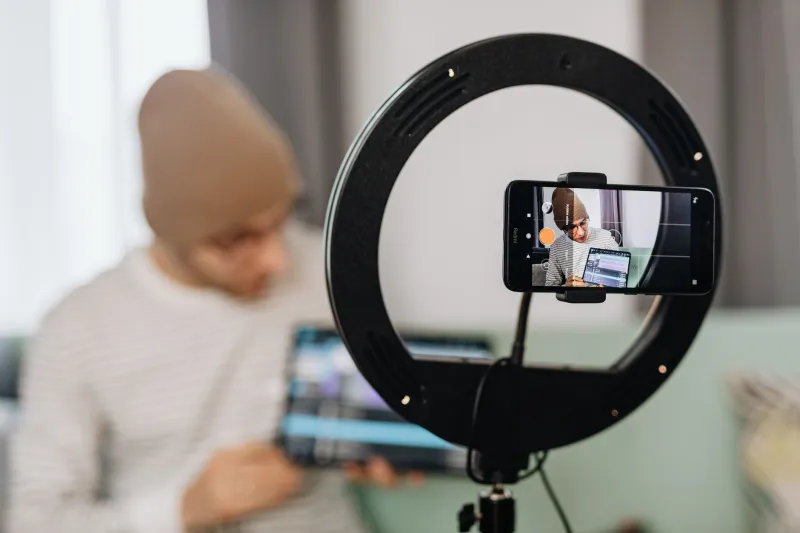
The irony is that the more effort goes into appearing unpolished, the more obvious the effort becomes. Authentic vulnerability doesn't come with a ring light and a backup camera angle.
The Bigger Picture
Influencer apology videos are, at their core, a symptom of a platform economy that incentivizes constant growth, discourages genuine accountability, and rewards the performance of emotion over its substance. When your livelihood depends on maintaining subscriber counts and brand partnerships, a real apology — one that might cost you followers, deals, or relevance — is a financial risk most people aren't willing to take.
So instead, we get the formula. The sigh. The ring-lit sincerity. The vague promise to do better.
And we keep watching, because at some point the apology video became its own genre of entertainment — a reality TV confessional booth where the stakes are just low enough to be funny and just high enough to be compelling.
Somebody's getting away with something, and we can't quite figure out who. That tension? That's the whole show.